Procedures
Colorectal Disease
Symptoms affecting the bowel or rectum can have a significant impact on daily life. When these symptoms persist or recur, prompt specialist assessment is usually recommended.
When should you see a colorectal surgeon?
Persistent or unexplained changes in your bowel habits, abdominal discomfort or rectal symptoms may warrant further assessment. Symptoms can have many causes, and seeing a specialist can help determine whether further investigation or treatment is needed. Common symptoms requiring assessment may include:
- Rectal bleeding or mucus.
- A persistent or notable change in bowel habits, such as stool appearance or frequency.
- Abdominal pain or cramping.
- Ongoing bowel or rectal discomfort.
Bowel Cancer
Bowel cancer, also known as colorectal cancer, develops in the colon or rectum, commonly caused by an undetected polyp.
While most are harmless, certain types of polyps can undergo abnormal cellular changes. When left untreated, these changes may progress to malignancy and invade surrounding tissue.
Assessment & Staging
Following a diagnosis of bowel cancer, staging investigations are performed to determine the extent of disease, assess its prognosis and establish the appropriate treatment plan.
Staging may involve a combination of tests, such as:
Blood tests to measure the levels of certain substances such as carcinoembryonic antigen (CEA).
Colonoscopy if further examine the bowel lining is required.
Imaging such as CT, MRI or PET-CT to assess the tumour and whether it has spread throughout the body.
Multidisciplinary Care
Treatment for bowel cancer involves a care plan developed by a multidisciplinary team of specialists. They may recommend surgery, chemotherapy, radiotherapy or a combination approach.
When developing a treatment plan for bowel cancer, the multidisciplinary team will consider:
- The location and size of the tumour.
- Whether the disease has spread to other lymph nodes or parts of the body.
- The type of cancer cells and their characteristics.
- The patient’s medical and surgical history, social circumstances and treatment preferences.
Surgical Management
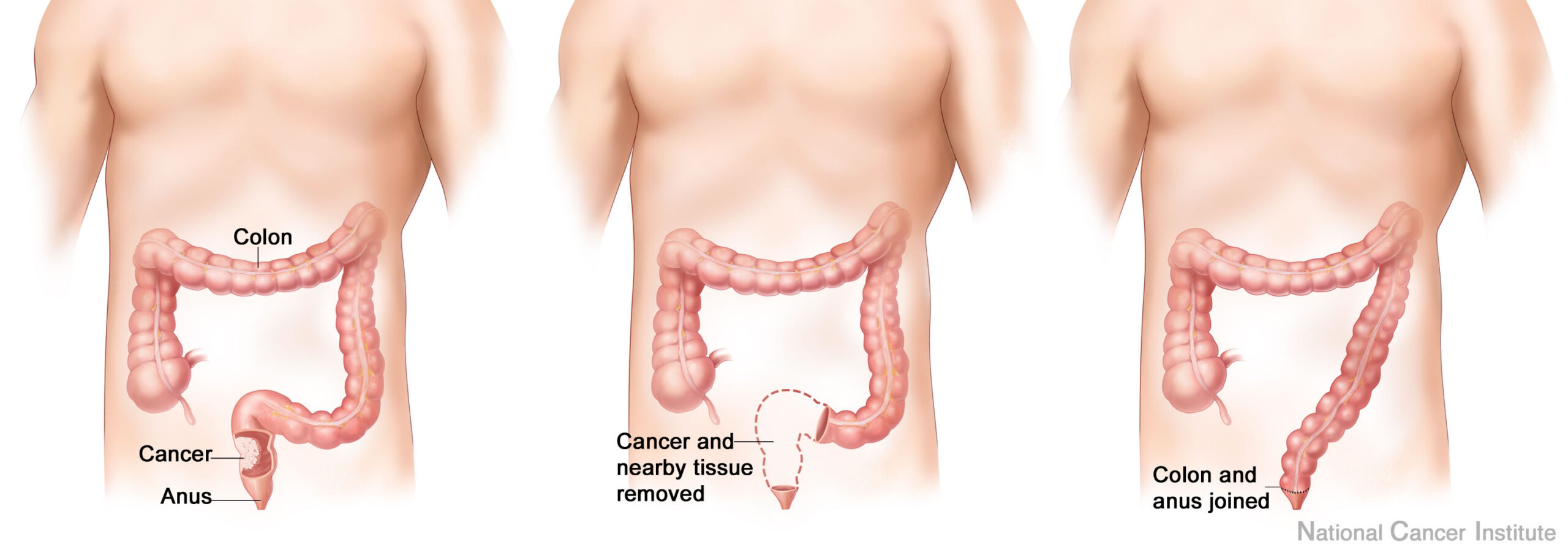
Surgery for bowel cancer aims to remove the tumour along with a margin of healthy tissue and any nearby affected lymph nodes.
A bowel resection involves removing the affected portion of bowel and joining the two healthy ends together. In some cases, a temporary stoma may be formed to allow the bowel to heal.
This procedure may be performed using robotic, laparoscopic or open surgery. Mr Stein will discuss the most suitable approach, considering factors such as the extent of disease and the patient’s medical and surgical history.
Diverticular Disease
Diverticular disease involves small pockets, known as diverticula, forming in the wall of the colon. The presence of one or more diverticula is known as diverticulosis. Inflamed and sometimes infected diverticula is known as diverticulitis.
Many people have diverticula without experiencing any symptoms. They are thought to develop due to increased pressure in the colon, causing them to push through weak areas in the bowel wall. This abdominal pressure may be associated with low-fibre intake and constipation.
Symptoms & Complications
Uncomplicated diverticular disease may cause:
- Lower abdominal pain, bloating or cramping.
- Changes in bowel habits.
- Rectal bleeding.
Complicated diverticular disease may cause:
- Abscesses, which are collections of infected fluid.
- Perforation, a tear or hole in the bowel wall.
- Obstruction, or a blockage of the bowel, commonly due to significant scarring.
Treatment
Treatment for diverticular disease usually focuses on a high-fibre diet, drinking plenty of fluids and simple pain relief as required.
If the disease develops, treatment may include temporarily resting the bowel with a clear fluid or low-fibre diet and antibiotics for active infection.
Surgical Management
Surgery may be recommended for severe or complicated diverticulitis, particularly when:
- Symptoms are recurrent or severe and do not respond to conservative treatment.
- Complications such as perforation or bowel obstruction develop.
- Bleeding occurs from blood vessels within diverticula.
- The disease is significantly impacting quality of life.
Surgery for diverticulitis involves removing the affected parts of the colon and joining the two healthy ends together. This may be performed by robotic, laparoscopic (keyhole) or open surgery.
In some cases, a temporary stoma may be required to allow the bowel to heal.
Inflammatory Bowel Disease
Crohn’s disease and ulcerative colitis are known as inflammatory bowel disease (IBD). Both conditions cause chronic inflammation of the bowel.
Symptoms of IBD often fluctuate between periods of active disease, known as flares, and periods of remission. This recurrent inflammation can have a significant impact on bowel function and quality of life.
Crohn’s & Ulcerative Colitis
Crohn’s disease commonly affects the small intestine but can occur anywhere along the digestive tract, from the mouth to the bowel. Inflammation may occur in patches and, in severe cases, can extend through the full thickness of the bowel wall, increasing the risk of complications.
The exact cause is unknown, but genetic and immune system factors are thought to play a role.
Ulcerative colitis is an autoimmune inflammatory bowel disease that damages the bowel lining of the large intestine. In more severe cases, ulcers can develop on the inflamed bowel lining, which can cause significant pain and bleeding.
The exact cause is unknown, but genetic, environmental and immune system factors are thought to contribute.
Common Symptoms
Despite Crohn’s disease and ulcerative colitis affecting the digestive tract differently, they can share similar symptoms. As these symptoms can overlap, seeing a specialist can help confirm the diagnosis and ensure appropriate treatment.
Common symptoms of IBD may include:
- Frequent diarrhoea or changes in bowel habits.
- Abdominal pain, discomfort or cramping.
- Faecal urgency.
- Rectal bleeding.
- Unexplained weight loss.
- Fatigue.
Multidisciplinary Care
Management of IBD involves a multidisciplinary team of specialists who work together in treating the disease.
A surgeon may be required to treat complications caused by the disease, such as:
- Bowel obstruction, often due to scarring and narrowing of the bowel.
- Fistula formation from recurrent inflammation.
- Abscess formation in the abdomen or around the anus.
In severe or persistent cases, disease may stop responding to medical treatment. Surgery may then be considered to relieve symptoms, remove areas of significantly affected bowel and improve quality of life.